Showing posts with label VOCABULARY. Show all posts
Showing posts with label VOCABULARY. Show all posts
Friday, November 23, 2018

Friday, October 12, 2018
Media Industries
- Brand identity: The image that a company makes for itself through the use of things like logos, slogans and other marketing tools in order to appeal to people/an audience.
- Cross-platform: The appearance of a media text on more than one platform; cross-platform or cross-media advertising is used to market a product like a film on the web, TV and newspapers.
- Endorsement: The act of supporting or backing something; celebrity endorsement is often used in advertising to sell a product.
- Ethos: The purpose, attitude and beliefs of a person or an organisation.
- Media convergence: When audiences use one platform to consume various types of media texts.
- Media format: A media format refers to whether the content is video, audio, print based, or a combination such as a website or video game.
- Media platform: A media platform is where a media text is presented; this can be TV, cinema, computer, games console, digital media player, smartphone, tablet, magazine, or newspaper.
- Media text: Any media product such as a TV programme, film, magazine, video game, newspaper, music track or album created for an audience.
- Niche audience: A small, narrow audience interested in a specific topic or theme (the opposite of a mass market audience).
- Public service broadcasting: Public service broadcasting is for the benefit of the public and not just for profit or commercial gain; the BBC is a public service broadcaster in the UK.
- Smartphone: A mobile phone with a powerful processor that is capable of running applications and accessing the internet.
- Tablet: A computer device a little smaller than a laptop but with a built-in touchscreen, usually without a keyboard.
The media industry can be defined as a varied collection of organisations that share the production, ,publication and distribution of media texts.
Media organisations include:
> BBC
> Disney
> News Corp
> Nintendo
> Marvel
> The Guardian
Media texts can be used to inform, entertain or promote ideas/products.
'Traditional media' or 'old media' are the names given to the industries that existed before the internet. For example, radio, print and television.
New media includes:
> Websites
> Blogs
> Vlogs
> Online games
> Podcasts
> Apps
Thursday, September 13, 2018
Semiotics
Semiotics - the study of signs/anything which stands for something else
Denotation - what we see when we look at an image
Connotation - what we understand from this image
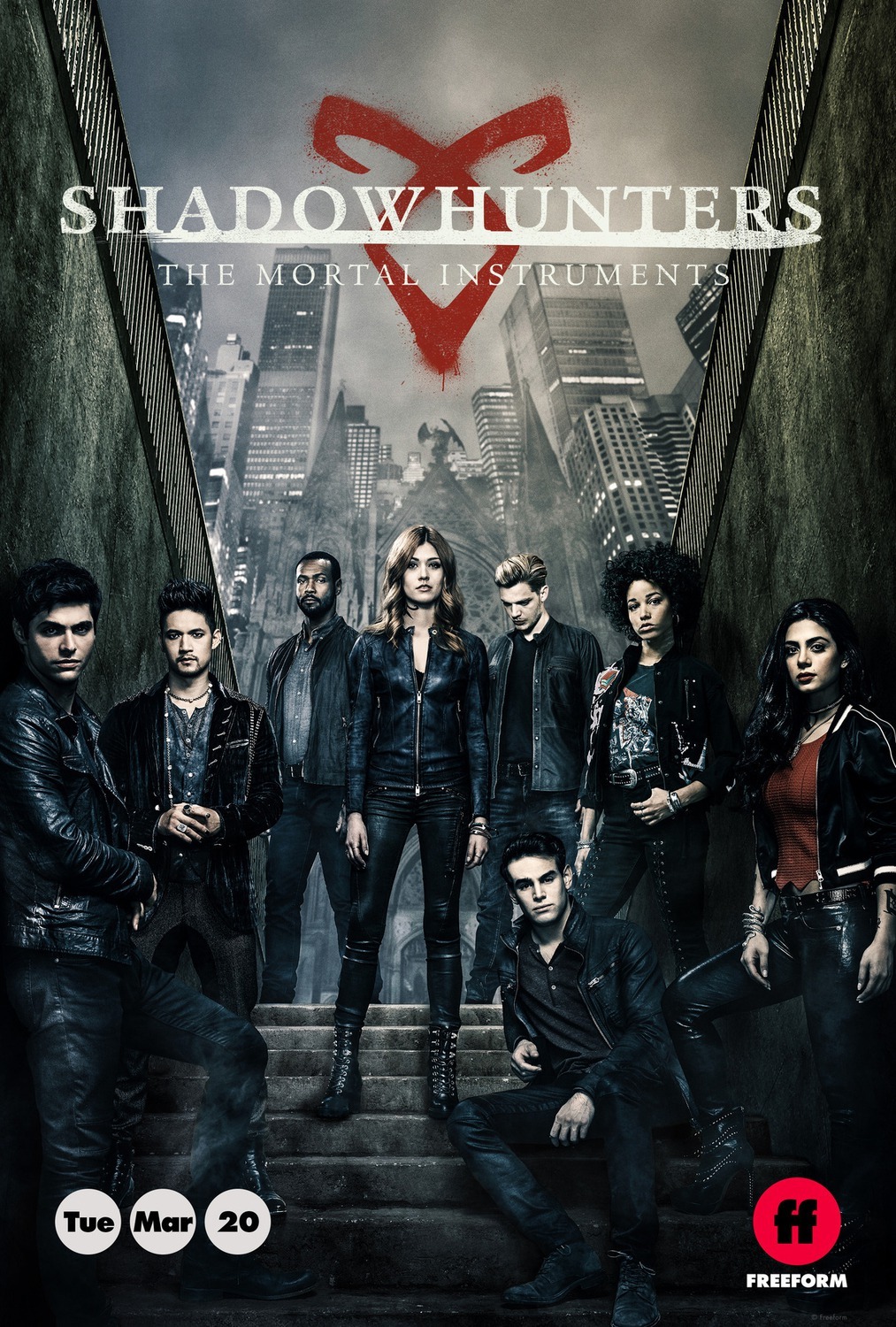
DI- This television poster shows the main characters all standing together amidst the chaos of downtown New York. Each character is surrounding the star of the show Clary Fray/Fairchild.
S - The series is set in New York as you can see the skyscrapers in the background.
T - The themes shown in the poster are good vs evil due to the fact that the characters (who fight against demons) are surrounded by a dark and gloomy city. However some could argue that love and jealousy is also a theme as in the centre of the poster is the main character Clary, but beside her is her father-like figure Luke and her love interest Jace.
I - There are no props used in this poster however their costumes do add that aspect of mystery and possible danger as they are all wearing black leather.
N - There is no story told in this poster.
C - Each character is standing next to a character that they have a relationship with (whether that be family or not). However, you can clearly see the main character is the strong red head in the centre of the poster as she draws the attention into the middle of the poster.
T - The large red symbol at the topnof the poster draws peoples attentions immediately as the photo has had a darker filter on it to make it look mysterious and dramatic, emphasising the genre of fantasy/sci-fi/action/adventure.
Denotation:
There are eight strong looking characters all surrounding one main female character who is placed in the center of the poster. The background consists of the skyscrapers in New York and a very cloudy/misty sky.
Connotation:
From the poster, we can clearly see how in the middle of the poster there is a red headed femal wearing black leather and being surrounded by harsh looking people. This draws the attention of young women as there aren’t gradually becoming more and more strong female leads on the television. We can also see that death is possibly involved as the large red symbol at the top of he poster shows the red slightly running down past the outlines of the symbol, creating an effect that looks like the dripping of blood. All of the buildings, walls and the stairs all look fairly old and tired however, the characters do not as they look clean and polished. This could mean that they are of he younger generation or it could mean that they are re new to whatever they are doing around the city of New York. The stormy looking weather in the background adds to the effect of possible or imminent danger.
Denotation - what we see when we look at an image
Connotation - what we understand from this image
DI- This television poster shows the main characters all standing together amidst the chaos of downtown New York. Each character is surrounding the star of the show Clary Fray/Fairchild.
S - The series is set in New York as you can see the skyscrapers in the background.
T - The themes shown in the poster are good vs evil due to the fact that the characters (who fight against demons) are surrounded by a dark and gloomy city. However some could argue that love and jealousy is also a theme as in the centre of the poster is the main character Clary, but beside her is her father-like figure Luke and her love interest Jace.
I - There are no props used in this poster however their costumes do add that aspect of mystery and possible danger as they are all wearing black leather.
N - There is no story told in this poster.
C - Each character is standing next to a character that they have a relationship with (whether that be family or not). However, you can clearly see the main character is the strong red head in the centre of the poster as she draws the attention into the middle of the poster.
T - The large red symbol at the topnof the poster draws peoples attentions immediately as the photo has had a darker filter on it to make it look mysterious and dramatic, emphasising the genre of fantasy/sci-fi/action/adventure.
Denotation:
There are eight strong looking characters all surrounding one main female character who is placed in the center of the poster. The background consists of the skyscrapers in New York and a very cloudy/misty sky.
Connotation:
From the poster, we can clearly see how in the middle of the poster there is a red headed femal wearing black leather and being surrounded by harsh looking people. This draws the attention of young women as there aren’t gradually becoming more and more strong female leads on the television. We can also see that death is possibly involved as the large red symbol at the top of he poster shows the red slightly running down past the outlines of the symbol, creating an effect that looks like the dripping of blood. All of the buildings, walls and the stairs all look fairly old and tired however, the characters do not as they look clean and polished. This could mean that they are of he younger generation or it could mean that they are re new to whatever they are doing around the city of New York. The stormy looking weather in the background adds to the effect of possible or imminent danger.
Wednesday, September 12, 2018
Genre
Definition of genre - a type or category
How do we identify genre?
DISTINCT is useful (acronym)
Describe In detail
Setting - location, historical time period
Themes - love, guilt, revenge, good vs evil
Icons - significant props such as a weapon or a wallet
Narrative - how a story is told, plot
Characters - boy/girl, background
Textual analysis - style of camera, editing, mise en scene and sound
Genre types:
> Sci-fi
> Horror
> Action
> Adventure
> Comedy
> Romance
> Drama
> Historical
> Documentary
Here are some photographs based on the HORROR and COMEDY genres:


How do we identify genre?
DISTINCT is useful (acronym)
Describe In detail
Setting - location, historical time period
Themes - love, guilt, revenge, good vs evil
Icons - significant props such as a weapon or a wallet
Narrative - how a story is told, plot
Characters - boy/girl, background
Textual analysis - style of camera, editing, mise en scene and sound
Genre types:
> Sci-fi
> Horror
> Action
> Adventure
> Comedy
> Romance
> Drama
> Historical
> Documentary
Here are some photographs based on the HORROR and COMEDY genres:

This photograph has been chosen to represent COMEDY.
By showing Sam hiding behind a tree with pom poms, it adds an element of comedic value to the mundane photograph.
By using the setting of a school, it makes the comedic aspect of the photograph to stand out as there is an abnormality in a normal scene.
By using a theme of laughter to represent comedy, we took a photograph of Sam smiling.
By using red and white pom poms, not only do they stand out from the surroundings, but they add that sense of humour as stereotypically a cheerleader would be a girl.

This photograph has been chosen to represent HORROR.
By using the prop of a large kitchen knife, it creates a feeling of mystery and anticipation as knives are typically associated with horror/thriller genres.
By having the image look slightly misty, it allows the knife to have a slight glint/shimmer on one side of the knife's blade. This allows the knife to stand out a little bit through the window of the car.
Steve Neale - Genre theory
The idea that genres may be dominated by repetition but are also marked by variation, difference and change.
The idea that genre changes, develops, varies and borrows and overlaps with one another.
Hybrid genre - combination of genres (e.g. Scary Movie etc.)
Subscribe to:
Posts (Atom)
Jean Baudrillard - Post Modernism theory + application of usefulness
Baudrillard's theory: - The idea that in postmodern culture, the boundaries between the 'real' world and the world of the medi...
-
Paul Gilroy's theory: - The idea that colonial discourses continue to inform contemporary attitudes to race and ethnicity in the postc...
-
Baudrillard's theory: - The idea that in postmodern culture, the boundaries between the 'real' world and the world of the medi...
-
DEMOGRAPHIC PROFILING: In order of job status, includes money etc. PSYCHOGRAPHIC PROFILING: mainstreamers - seek security. aspirers ...


